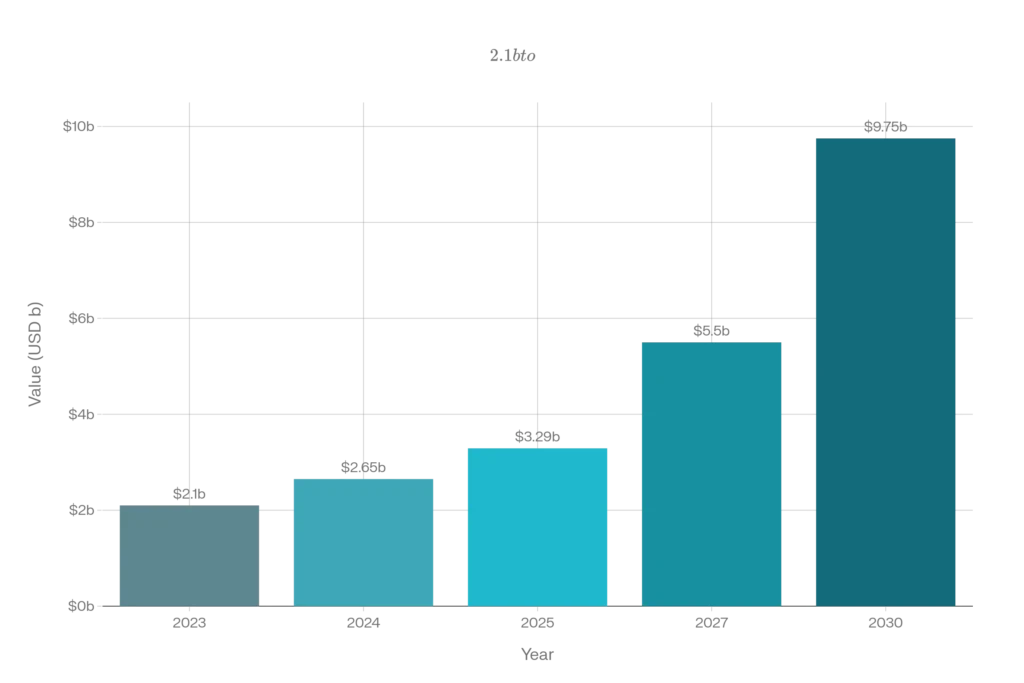
Voice cloning technology is transforming how content creators produce YouTube videos. What once required hours in a recording studio can now be generated in minutes with your authentic voice. The global AI voice cloning market is expanding rapidly—projected to grow from $2.65 billion in 2024 to $9.75 billion by 2030 at a compound annual growth rate of 26.1%. For YouTube creators, this represents an unprecedented opportunity to scale content production, maintain brand consistency, and reduce production costs by up to 60%. This comprehensive guide walks you through everything you need to know about cloning your voice using ElevenLabs, from technical setup to ethical best practices and real-world applications.
Understanding Voice Cloning Technology
What Is Voice Cloning?
Voice cloning is the process of creating an artificially generated voice that sounds remarkably similar to a real person’s voice. Unlike traditional text-to-speech (TTS) systems that sound robotic and monotone, modern voice cloning uses deep learning to replicate tone, rhythm, accent, and emotional nuances with near-perfect accuracy. The technology analyzes patterns formed over years of natural speech and recreates them digitally, allowing you to generate new speech in your authentic voice saying anything you type.
By 2025, voice cloning has reached remarkable sophistication. AI systems can now create voices that are virtually indistinguishable from human speech, capturing emotional range, natural pauses, breathing patterns, and even subtle inflections. The breakthrough that makes this possible is zero-shot learning—the ability to clone voices from minimal audio input, sometimes requiring just 10 seconds to 1 minute of recording.
How Does Voice Cloning Work?
The voice cloning process involves three distinct stages working together:
Step 1: Voice Sampling and Data Collection
The system begins by recording or collecting your voice samples. Modern platforms like ElevenLabs require anywhere from 1-3 minutes for instant cloning, or 30 minutes or more for professional-grade cloning. During sampling, the AI captures pitch variations, speaking speed, accent markers, emotional undertones, and your unique pronunciation patterns.
Step 2: Pattern Recognition Through Neural Networks
Once your audio is uploaded, machine learning algorithms break down your voice into its fundamental components—phonemes (smallest units of sound), prosody (rhythm and flow), and vocal characteristics. The system analyzes thousands of data points including how you naturally stress syllables, where you pause between words, and how your voice rises when asking questions. Advanced neural networks like Tacotron 2 and WaveRNN convert this analysis into mathematical representations of your voice.
Step 3: Digital Model Creation and Synthesis
Using deep learning, the platform builds what researchers call a speaker embedding—essentially a digital fingerprint of your voice. This model understands not just what you sound like, but how you would naturally sound saying new words you’ve never recorded. When you type new text, the AI uses this model to predict your vocal patterns and generate corresponding audio.
Modern systems achieve remarkable accuracy. Research demonstrates that professional voice cloning can achieve up to 99% similarity to the original voice, making detection nearly impossible to the human ear.
Why YouTube Creators Should Use Voice Cloning
Time and Cost Efficiency
For YouTube creators, time is the scarcest resource. Traditional voiceover production involves scheduling recording sessions, dealing with background noise, managing equipment, and often requiring multiple takes. With voice cloning, the entire process collapses to seconds.
Consider the numbers: hiring professional voice actors for consistent YouTube content costs hundreds to thousands of dollars monthly. Quality microphone equipment, soundproofing, and editing software add thousands more. Voice cloning platforms reduce these costs by over 90% while maintaining professional quality. A creator producing 50 videos per year could reduce voiceover costs from $12,000 annually to under $300—while simultaneously cutting production time from weeks to hours.
Beyond cost, the time savings are transformative. Large YouTube channels often produce multiple videos weekly. With traditional recording, this requires constant studio availability. Voice cloning eliminates studio dependency—your digital voice works while you sleep, travel, or focus on other creative tasks.
Maintaining Brand Consistency
Your voice is part of your brand identity. Viewers connect emotionally with familiar voices, building trust and recognition over time. When creators rely on different voice actors or their own inconsistent recordings, viewers notice the discontinuity.
With voice cloning, your signature voice remains absolutely consistent across every video. A cloned voice maintains identical tone, pacing, and emotional expression whether you’re creating your first video or your thousandth. This consistency strengthens viewer loyalty and increases watch time—audiences unconsciously prefer familiar audio patterns.
Scaling Content Production
The most successful YouTube channels share one characteristic: they produce high-volume, high-quality content consistently. Voice cloning enables scalable creativity. A single cloned voice can generate voiceovers for:
- Multiple video series simultaneously
- Tutorials in different languages while maintaining your voice
- Faceless or semi-faceless channels covering broader topics
- Bulk content creation for seasonal campaigns
- A/B test variations with different delivery styles
- Guest appearances using your voice
Research shows that voice cloning can increase content production capacity by 300-400% for individual creators. When your voice doesn’t require you to be physically present in a studio, scaling becomes a matter of script preparation rather than logistical complexity.
Complete Step-by-Step Guide to Cloning Your Voice on ElevenLabs
Prerequisites: What You’ll Need
Before beginning, gather these essentials:
- A clear voice recording: 1-3 minutes for instant cloning (professional cloning requires 30+ minutes)
- Quality audio: Recorded in a quiet environment with minimal background noise
- An ElevenLabs account: Free account initially (you’ll upgrade for cloning features)
- A microphone: Any standard microphone works—smartphone microphones are adequate for instant cloning
- Varied audio samples: Include different sentence lengths, speeds, and emotional tones
Audio Requirements for Best Results
The quality of your voice clone depends entirely on your input audio. ElevenLabs provides specific technical guidelines:
Audio Duration and Quality
- Optimal length: 1-2 minutes total of clear audio (avoid recording more than 3 minutes—quality plateaus and can deteriorate)
- Audio codec: MP3 at 128 kbps or higher (higher bitrates provide minimal improvement)
- Ambient conditions: Record in quiet spaces with zero background noise, no reverb, and no artifacts
- Volume levels: Aim for -23 dB to -18 dB RMS with a true peak of -3 dB
Recording Performance Guidelines
The AI clones not just your voice, but your performance. If you record in a slow, monotone delivery, the AI will replicate that monotone. If you speak quickly with emotion, the AI captures that energy. This is critical: provide varied, natural, expressive samples.
Consistency Across Samples
Your voice should maintain consistent tone throughout. Avoid extreme fluctuations in pitch and volume. The AI will attempt to mimic everything it hears—including background noises, mouth clicks, breathing patterns, and accent patterns. Even artifacts that confuse the model should be minimized.
Creating Your Voice Clone: The Exact Process
Step 1: Create and Verify Your ElevenLabs Account
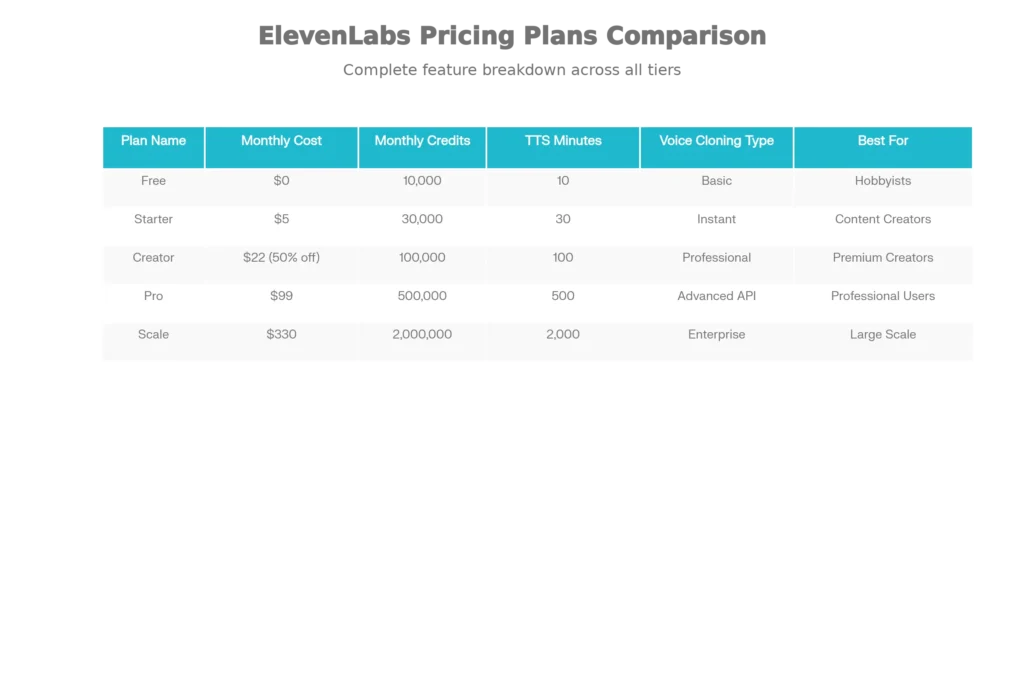
Navigate to elevenlabs.io and sign up for a free account. Free accounts include 10,000 monthly credits and basic access to their voice library. Voice cloning features require upgrading to at least the Starter plan ($5/month), which includes 30,000 monthly credits and instant voice cloning.
Step 2: Navigate to Voice Cloning
Once logged in, click the “Voices” section on the left sidebar of your ElevenLabs dashboard. You’ll see two options: “Add a new voice” (top right) or a button for “Add generative or cloned voice” in the center. Click either to proceed.
Step 3: Select Instant Voice Clone
From the modal that appears, select “Instant Voice Clone”. This option requires just 1-3 minutes of audio and processes in minutes. (The alternative, Professional Voice Cloning, requires 30+ minutes of high-quality audio but produces virtually indistinguishable results—ideal for professional audiobook narration or brand voices.)
Step 4: Upload Your Voice Recording
The interface provides two options:
- Record directly: Use your microphone to record 1-2 minutes of speech directly in the platform
- Upload audio: Drag and drop pre-recorded audio files (WAV, MP3, M4A formats)
Record naturally, speaking in a conversational tone. Include varied sentences, different lengths, and if possible, slight emotional variation (enthusiasm, calm, excitement). This variety trains the AI to handle diverse contexts.
Step 5: Confirm Voice Details and Consent
After uploading, ElevenLabs requires you to:
- Name your voice: Choose a descriptive name (e.g., “My YouTube Voice”)
- Add a label: Specify the language (English, Spanish, etc.)
- Confirm consent: Tick the checkbox confirming you have the right and consent to clone this voice
- Add a description (optional): Brief note about the voice’s characteristics
Step 6: Save Your Voice Clone
Click “Save Voice”. ElevenLabs processes your audio through their neural networks—typically taking 2-5 minutes for instant cloning. You’ll receive a notification once your voice clone is ready.
Step 7: Test Your Cloned Voice
Navigate to the “Voices” section and select the “Personal” tab to find your cloned voice. Click on it to open the generation interface. Type a test script—anything from a YouTube intro to a full paragraph—and click “Generate Speech”. Listen to the output. The voice should sound remarkably like you, though some users notice it’s a slight variation of their natural voice.
Fine-Tuning Your Voice Clone
After generation, ElevenLabs offers customization controls:
Stability and Similarity Slider
- Stability: Controls consistency (lower = more varied, higher = more consistent)
- Similarity Boost: Increases how closely the clone matches your original voice
Style and Speed Controls
- Tone adjustment: Make your voice warmer, sharper, more professional, or more casual
- Speaking speed: Adjust from slow (ideal for educational content) to fast (ideal for energetic product videos)
- Emotion tags: Add [excited], [sad], [confident], etc., directly in your text for emotional inflection
Performance Optimization
For YouTube specifically, creators often find that:
- Slightly reducing stability (60-70% instead of 100%) creates more natural variation between sentences
- Adding slight emotion tags prevents monotone delivery
- Speaking faster in the original recording helps the AI create energetic clones
YouTube-Specific Applications and Workflows
Workflow 1: Scripted Educational Content
Educational channels (tutorials, how-to, explanatory content) benefit most from voice cloning:
- Write your complete script
- Generate voiceover using your cloned voice in 2-5 minutes
- Adjust speed and emotion for clarity (slower speed for technical concepts)
- Download the audio file
- Import into your video editing software
- Layer with visuals and animations
This workflow reduces voiceover production time from 2-3 hours (recording, editing, mixing) to 10 minutes.
Workflow 2: Multilingual Content Expansion
One of voice cloning’s most powerful YouTube applications is language expansion. Your cloned voice can speak over 70 languages while maintaining your original accent and emotional tone:
- Translate your script into target languages
- Generate voiceovers in each language using your cloned voice
- Create country-specific versions of your video
- Expand to new markets without hiring translators or voice actors
Platforms like Respeecher report that YouTube creators using this approach increase their addressable audience by 300-500%.
Workflow 3: Rapid A/B Testing
Marketing-focused creators can leverage voice cloning for rapid A/B testing:
Generate multiple variations of the same script with different emotional tones, speeds, and emphasis patterns. Test which resonates with your audience. This would take weeks with human voice actors but takes hours with cloning.
Privacy, Ethics, and Legal Considerations
Consent and Voice Ownership
The fundamental ethical principle of voice cloning is explicit, documented consent. You can legally and ethically clone:
- Your own voice without question
- Others’ voices only with their explicit, written consent
- Public figures’ voices generally requires formal licensing agreements
ElevenLabs requires users to confirm they have the right and consent to clone any voice. This protects both creators and the platform from legal liability.
Terms of Service and Data Ownership
In 2025, a critical issue emerged with ElevenLabs when they updated their Terms of Service to claim “perpetual, irrevocable” rights over user voice data. This raised concerns among creators. Before uploading your voice, read ElevenLabs’ current privacy policy carefully. Understanding who owns your voice data is critical for professional creators who may license their voice long-term.
Preventing Deepfakes and Misuse
While voice cloning enables amazing creativity, it also enables fraud. Cybercriminals use cloned voices in phone scams, impersonating executives or loved ones. Best practices to prevent misuse:
- Watermark your content: Embed audio watermarks identifying synthetic speech
- Be transparent: Inform audiences when content uses synthetic voices
- Monitor usage: Keep track of where your voice clone is being used
- Use strong passwords: Secure your ElevenLabs account with two-factor authentication
Research shows that 77% of victims of AI voice scams reported losing money, highlighting real financial risks. Responsible use protects both creators and audiences.
Real-World Success Stories and Market Impact
YouTube Creator Examples
Professional creators and brands are already leveraging voice cloning effectively:
- Educational channels: Reduced voiceover production time by 75%, allowing faster video publishing schedules
- Multilingual channels: Expanded reach to 15+ countries using single-voice clones in multiple languages
- Faceless channels: Built entire channels around voice cloning, eliminating on-camera requirements while maintaining authentic narration
Industry Adoption
The Media & Entertainment sector dominates voice cloning adoption, holding 25.6% of the market. This includes:
- Podcast production: Hosts fix mispronunciations or update segments without returning to the studio
- Video dubbing: Films and series are being dubbed into multiple languages using cloned voices
- Gaming: Video game characters receive voice acting using cloned voices
- Audiobooks: Narrators preserve their voices for long-term audiobook production
Professional voice actors are increasingly licensing their voices through platforms like ElevenLabs, creating passive income streams.
Comparing ElevenLabs to Alternatives
While ElevenLabs dominates the market, other platforms offer competitive features:
| Platform | Strengths | Best For | Pricing |
|---|---|---|---|
| ElevenLabs | Superior English voice quality, 29 languages, fastest real-time generation (75-100ms latency) | Professional creators wanting premium English voices | $5-$330/month |
| Cartesia | Advanced customization, lower latency, competitive pricing | Developers and technical users | Custom pricing |
| Murf.ai | Emotional range, intuitive interface, podcast-focused | Podcast and audiobook creators | $10-$60/month |
| Descript Overdub | Seamless video editing integration, simple workflow | Video editors and YouTubers | $24/month (premium) |
| PlayHT | Fast generation, multilingual support, e-learning focus | E-learning and instructional content | $20-$99/month |
ElevenLabs remains the industry standard for YouTube creators due to superior voice realism, multilingual support, and ease of use.
Technical Deep Dive: The Science Behind the Sound
Neural Network Architecture
Modern voice cloning relies on sophisticated neural network architectures. ElevenLabs uses variations of:
- Speaker Encoder: Extracts your vocal identity into a numerical representation called an embedding
- Tacotron 2: Converts text into spectrograms (visual representations of sound frequency)
- WaveRNN Vocoder: Converts spectrograms back into high-fidelity audio waveform
This three-stage architecture allows zero-shot cloning—generating your voice saying new sentences without retraining the entire model. Traditional systems required hours of retraining; modern systems accomplish it in seconds.
Evaluation Metrics
Research papers evaluate voice cloning quality using:
- PESQ (Perceptual Evaluation of Speech Quality): Measures speech quality like humans would hear it
- STOI (Short-Time Objective Intelligibility): Measures how intelligible the speech is
- Mel Cepstral Distortion (MCD): Measures how closely the cloned voice matches the original across frequency spectra
Published research demonstrates that state-of-the-art voice cloning achieves improvements of 30-50% over baseline approaches in these metrics.
Troubleshooting Common Issues
My Voice Sounds Robotic
Cause: Monotone input recording or excessive stability settings
Solution: Re-record with more natural emotion and variation. Reduce stability slider to 60-70% and add emotional tone tags like [excited] or [confident]
Mispronunciation of Specific Words
Cause: AI learns from your original audio patterns, including accent quirks
Solution: Use SSML (Speech Synthesis Markup Language) to specify pronunciation. Add phonetic spelling in brackets: “tomato [tə’meɪtoʊ]”
Background Noise in Generated Speech
Cause: Your input audio contained ambient noise that the AI learned
Solution: Use audio editing software to remove noise before uploading. Platforms like Audacity (free) can isolate clean voice tracks
Voice Sounds Inconsistent Between Generations
Cause: Wide fluctuations in tone during original recording
Solution: Ensure consistent vocal tone throughout your sample recording. Speak at uniform volume and pace
Getting Maximum Value from Your Voice Clone
Best Practices for Creators
- Create a content calendar: Plan 4-8 weeks of scripts in advance to maximize cloning efficiency
- Batch content creation: Generate multiple voiceovers in single sessions to leverage subscription credits
- Archive voice variations: Save different emotional and speed variations of your voice for flexibility
- Monitor audio quality: Occasionally compare your AI-generated voiceovers to new recordings to ensure consistency
- Test with audiences: Survey viewers to measure whether they perceive a difference between cloned and natural voices
Measuring ROI
Track these metrics to calculate your return on investment:
- Time saved per video: Traditional recording (1 hour) vs. voice cloning (5 minutes) = 55 minutes saved
- Cost reduction: Professional voice actor ($200/video) vs. cloning subscription ($66/month = $2.20/video for Creator plan)
- Production scaling: Increase video output from 2/week to 4/week using time savings
- Geographic expansion: Multilingual cloning costs $0 additional per language (vs. $500-2000 per language with human actors)
A typical YouTube channel producing 50 videos annually could realize $8,000-12,000 in annual savings while increasing output by 150%.
The Future of Voice Cloning for Creators
The industry is evolving rapidly. By late 2025 and beyond, expect:
- Real-time voice conversion for live streaming and video calls
- Emotional intelligence allowing cloned voices to automatically adjust emotion based on script content
- Ultra-low latency enabling seamless conversational AI
- Reduced pricing: Basic voice cloning dropping below $1/month as competition increases
- Better detection tools: Watermarking technology will distinguish human from synthetic speech, building audience trust
The global voice cloning market is expected to reach $9.75 billion by 2030, representing 26.1% annual growth. This expansion benefits individual creators through more competition, better pricing, and advanced features.
Conclusion
Voice cloning via ElevenLabs represents a paradigm shift in YouTube content production. What required expensive equipment, professional voice actors, and studio time now happens in minutes through AI. The technology is mature, affordable, and increasingly ethical as platforms implement safeguards and transparency measures.
For YouTube creators seeking to scale, clone your voice when you’re ready to multiply output without multiplying workload. Follow the technical guidelines provided by ElevenLabs, respect ethical boundaries around consent and ownership, and measure your success through time saved and audience reach expanded.
The creators building tomorrow’s most successful channels won’t necessarily be the best speakers—they’ll be those who master the tools that let them speak infinitely, in any language, at any time. Voice cloning is that tool.
Read More:Best AI Tools for Auto-Captioning Reels (Hindi & English)
Source: K2Think.in — India’s AI Reasoning Insight Platform.